A small beginning, with every relationship close enough to hold personally.

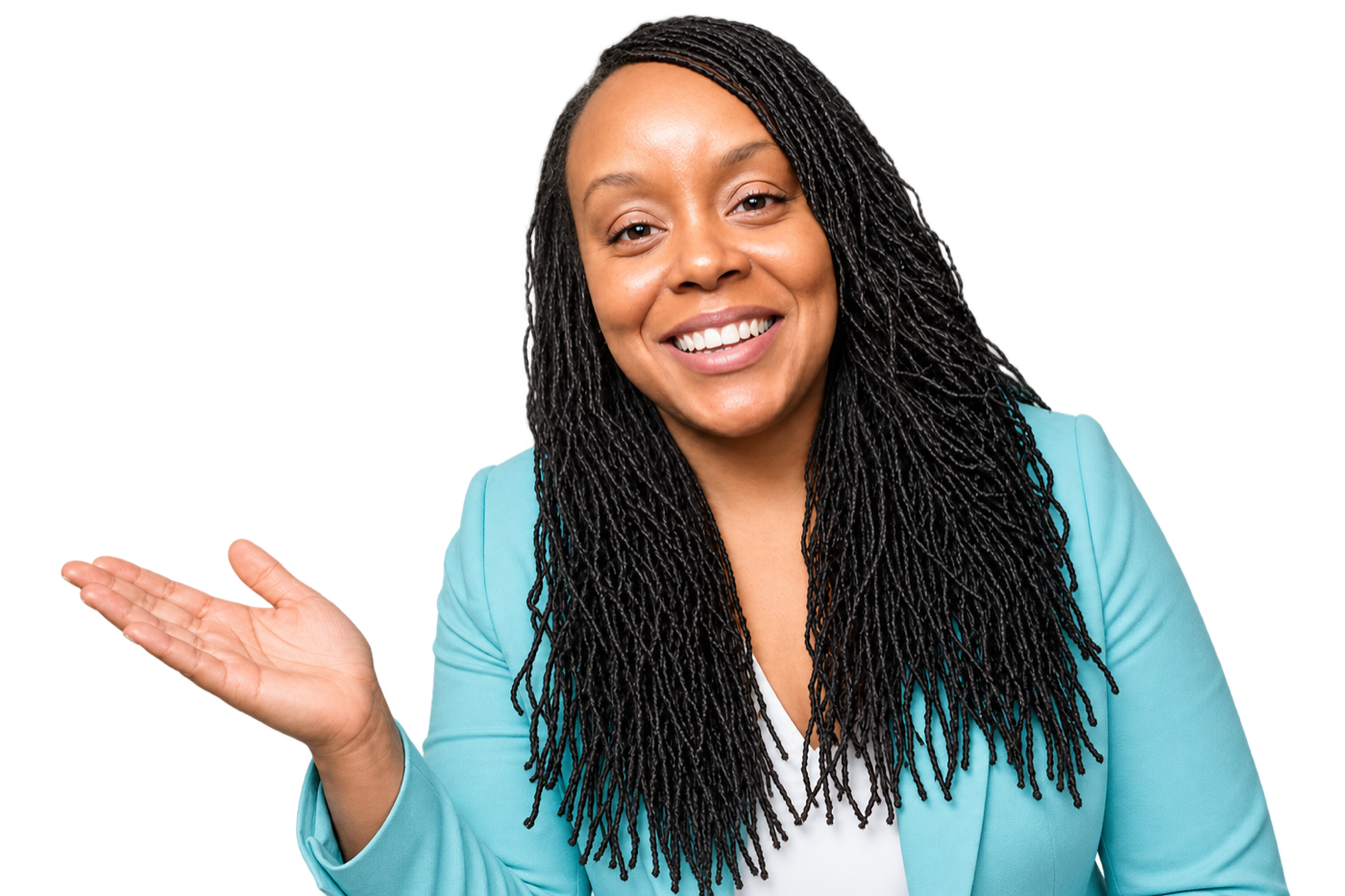
Hi, I’m Latoya Robinson
You were hired to lead the mission.Not to become the system.
I spent 15 years in the executive director seat. I know what it feels like when every answer, relationship, and workaround routes through you. I built LUR Growth to give nonprofit leaders the operating partner I needed then.
20 years in the sector15 years in the executive director seat CPD accredited provider
No. 51018, 2026 to 2028
CPD accredited providerNo. 51018, 2026 to 2028
01 · The pattern we keep seeing
Most nonprofits do not have a strategy problem.
They have eleven logins, four spreadsheets that are really databases, and one person who knows how it all fits together.
When that person is out for a week, the work waits. When they leave, the memory leaves with them.
That is not a leadership failure. It is a systems gap.
You just did what one person on a small team does every week. No one else can see where the pieces went.
Drag a card to explore
SGoogle SheetsDonor list, v7 (final)
GGmailBoard update, draft 3
WWordGrant narrative, copied from last year
IInstrumentlGrant search, 40 open tabs
QQuickBooksBudget export for the board
CCanvaImpact story, still a draft
CCConstant ContactNewsletter, two weeks late
IGInstagramDid this ever get posted?
02 · What I learned from inside
The mission was growing.So was the weight I carried.Eventually, something had to give.

- Nine
families - More
clients - More
decisions - More
relationships - More
responsibility - Greater
impact
I had built systems to protect the work, but not the person carrying it.
The impact grew, but so did the number of answers and decisions living with one leader.
Grief and constant availability caught up with my health. Protecting the leader had to become part of the infrastructure.
The operating partner I needed then, built for nonprofit leaders now.
Protecting the leader is part of protecting the mission.
03 · The system, made visible
 Grant research
 Grant writing
 Donor reporting
 Board updatesBudget + finance
 Impact stories
 Social media
Your nonprofit operating system AI layerClaudeBuilt to hold.
 Human review stays in the system
AI layerClaudeBuilt to hold.Shared dataClear workflowsEquipped peopleVisible impact
04 · One workflow, drawn plainly
Here is one piece
of the system.
The monthly report a funder is waiting for. The numbers live in three places today. Gathered once. A draft written from your own figures, in your own voice. A person who reads it before anything moves.
Nothing here replaces the person. It removes the copying, the chasing, and the three logins between them and the work.
Before anything is automated
Faster is not betterif ownership is still unclear.
AI should not accelerate a broken process. We clarify the decision, the people around it, and the boundaries first. Then we decide what the system can safely carry.
Clear ownership first. Responsible automation second.
05 · Your pain point, drawn
Pick the thing that is
drowning your team.
Then watch the system for it draw itself. Every one keeps a person in it, and every one runs on tools you already pay for.
Eight jobs. One system your team owns. Your people stay in it.
Donor and funder reportingDrawing the system
Lives nowDonor list in Sheets Lives nowGifts in QuickBooks
OnceGathered, not re-typed
In your voiceThe report drafted from your own numbers
Human reviewFinance reads it first
What landsA funder report, on the first


06 · A year from now
The same room, a year from now.
The funder report went out on the first. The board got its update on Tuesday. You did not stay late for either, and none of it read like a machine wrote it.
07 · The record
Real rooms.
Real numbers.
Every figure here is one we can show you. Where there is no verified number, there is no number. Counts are taken from the system as delivered. Time savings are measured one way only: a two-week log of the workflow before the build, and the same log again after the team is trained. Three closed logs are on this rail. Annual figures are not, because a two-week rate is not a year.
Case · Named Fund campaign · 12 weeks
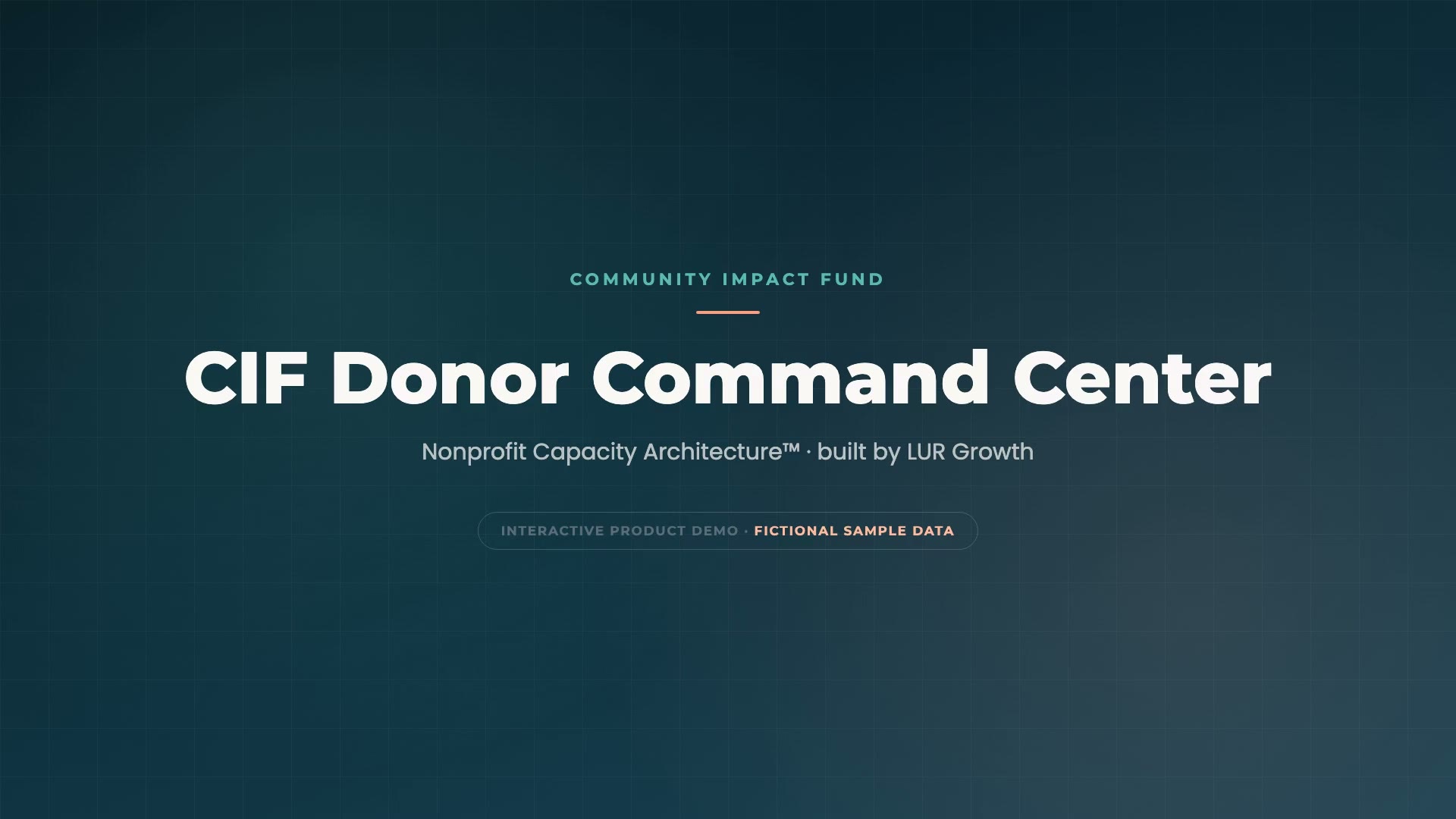
Community Impact Fund of the Virgin Islands
33 major-gift prospects loaded and staged in the system on day one
A team of three, a Named Fund campaign, no stewardship system behind it. A donor database, automated reporting, and live fund visibility, documented and handed over. Their own staff run it today. See what we built → Open the demo ↗
Case · Reporting workflow · measured before and after
A community health nonprofit
12 staff hours returned every two weeks. 30 hours to 18, a 40% drop in time spent on manual reporting.
A lean team spent about 30 staff hours every two weeks gathering information, reconciling records across systems, and moving it between people and platforms. LUR Growth redesigned the workflow around the team that already existed: clear ownership, no duplicate entry, connected steps, reusable reporting structures, responsible AI only where it carried real weight. Measured with a matched two-week log before the build and again after training. The client completed both periods and reported the result.
Case · Fund development strategy · board workshop
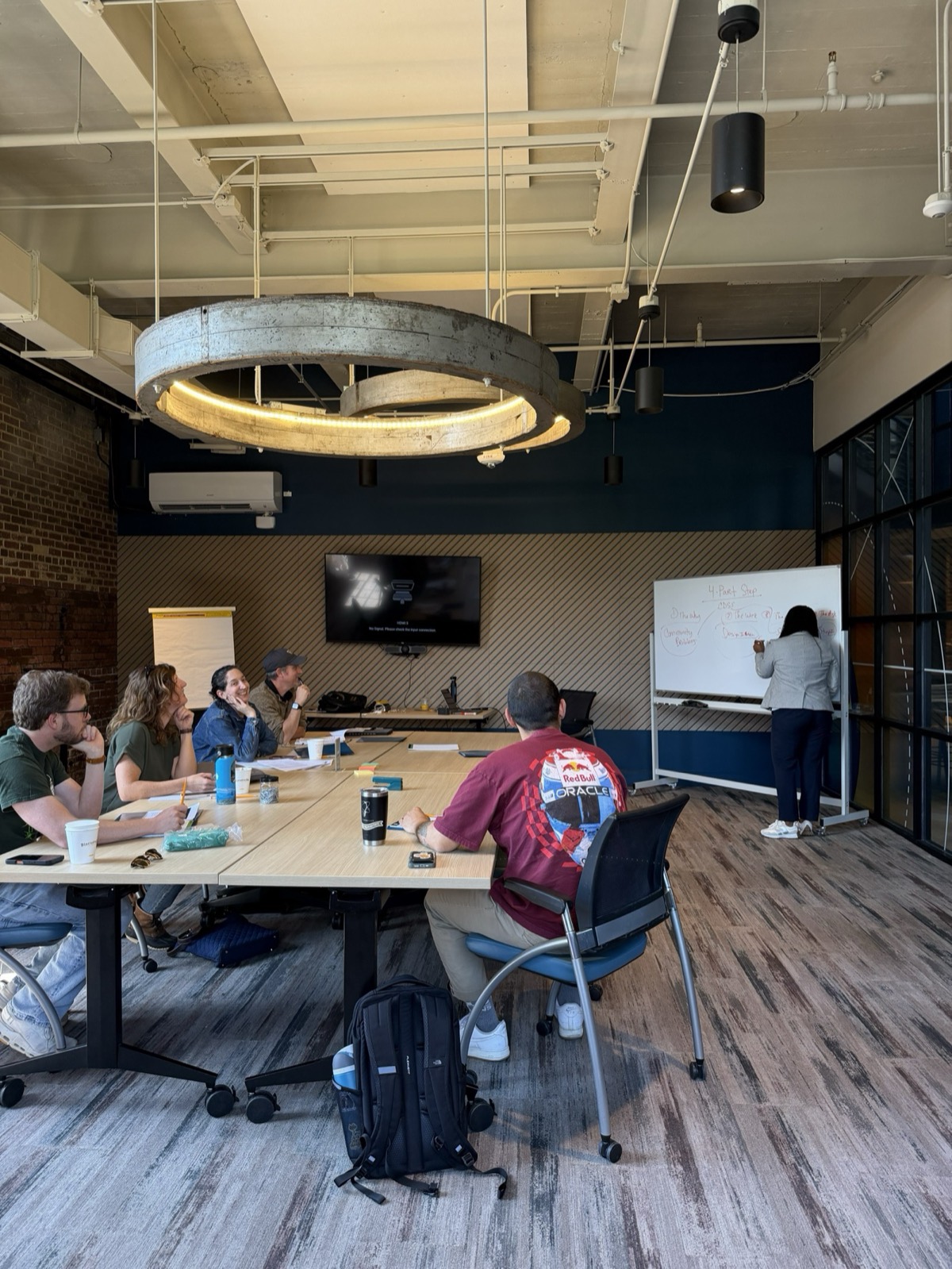
Community Design Studio
10 deliverables, one board dashboard, handed over
A volunteer-led design nonprofit in Winston-Salem. Funding landscape, funder pipeline, donor engagement plan, roles matrix, SOPs, evaluation framework, and a Saturday workshop where the board wrote its own action plans. Everything lives on a private board dashboard.
Case · Funder · executive assistant dashboard · 2026
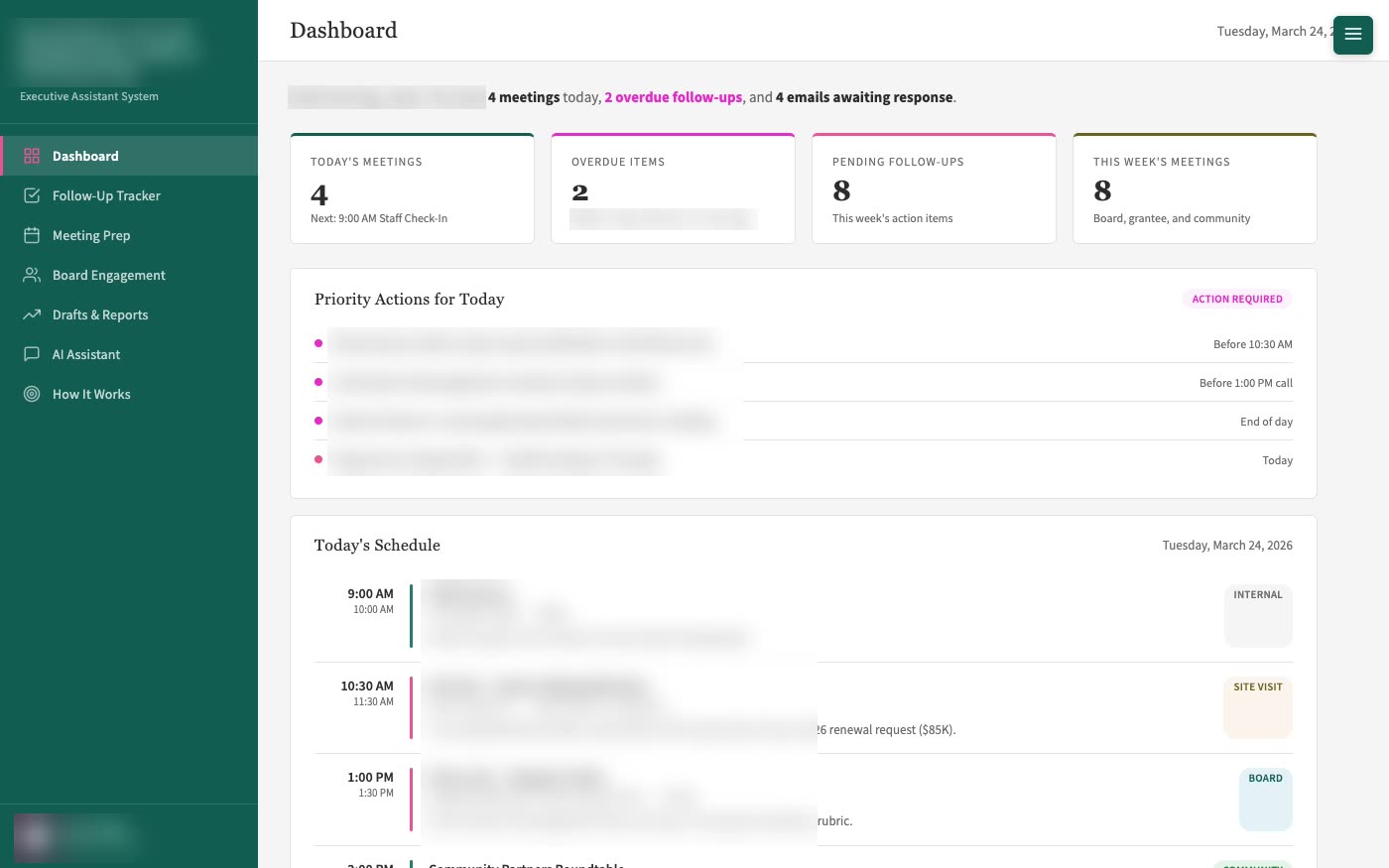
A North Carolina family foundation
1 executive director, one morning view: schedule, follow-ups, board updates, drafted emails, running on Outlook
A family foundation whose director carried the calendar, the follow-ups, and the board in his head. A dashboard drafted from his own inbox and calendar, reviewed by him before anything sends. “This is the secret sauce right here.” Open the demo ↗
Case · Board and staff portal · 2026
A community nonprofit with a working board
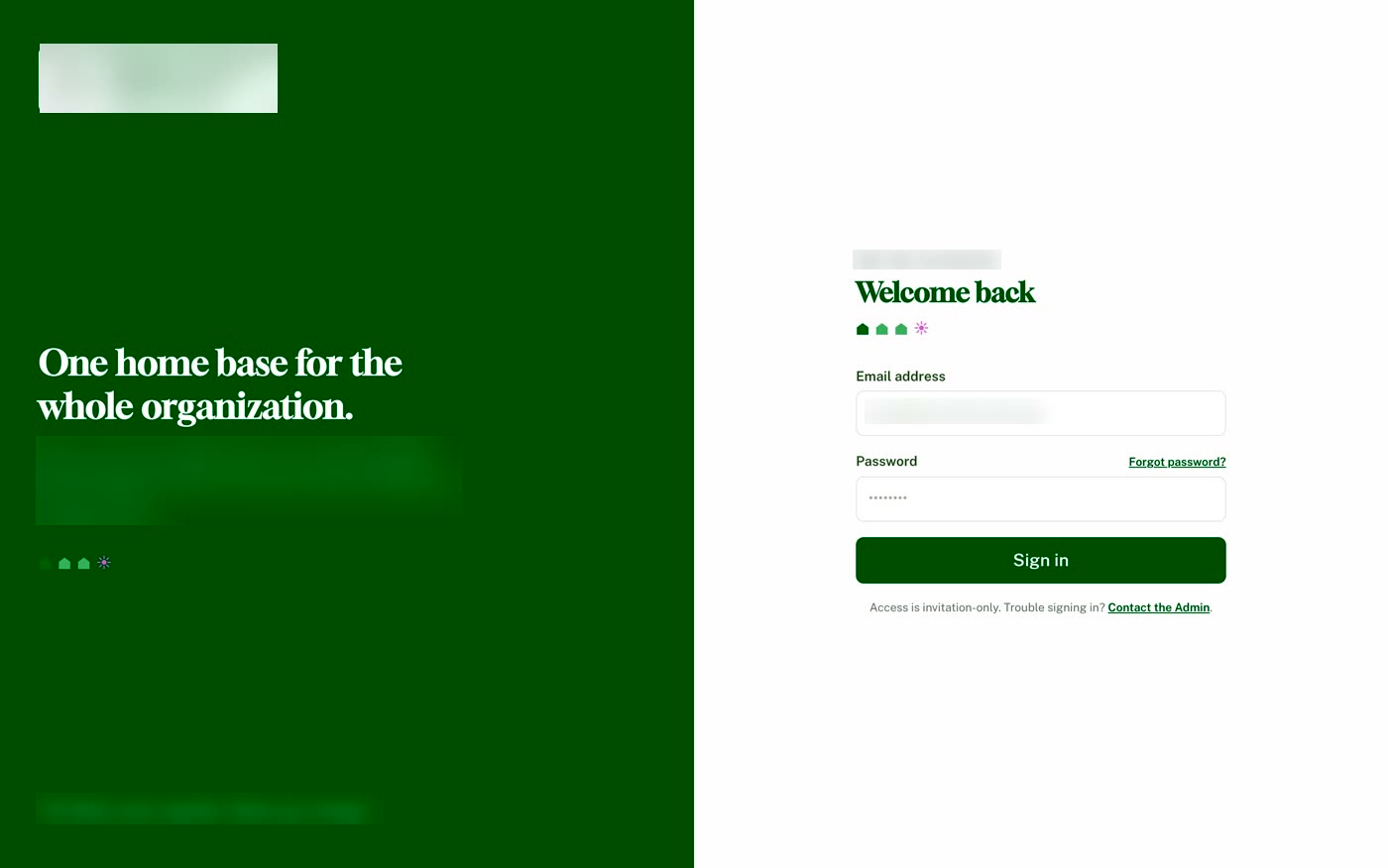
4 visibility tiers, from public to executive committee, enforced server-side
One secured home for staff and board: new-member onboarding, the document library, the meeting center, resolutions, engagement and term tracking, an audit trail. Live, invitation-only, and used by a board Latoya sits with every month. A capital campaign dashboard built on the same pattern is open as a demo. Open the demo ↗
Case · Program infrastructure · measured before and after
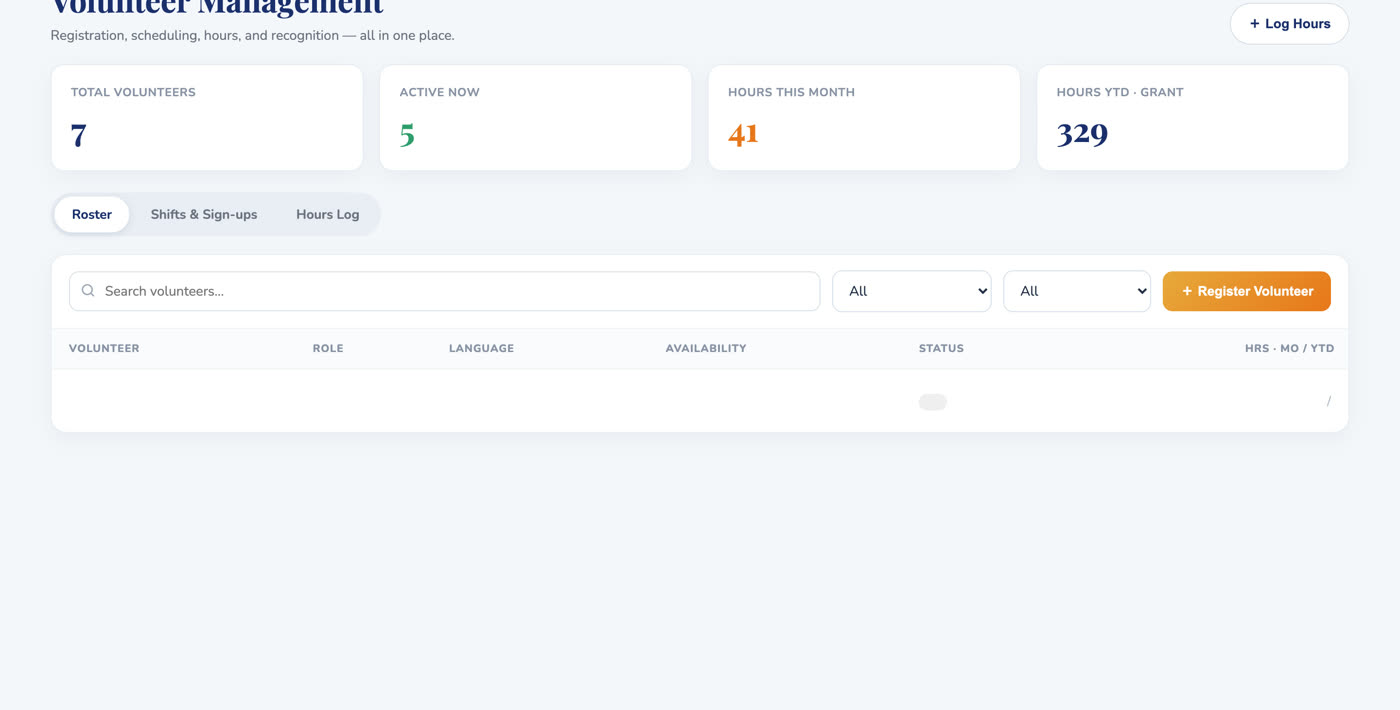
A bilingual after-school program for Latino families
13 staff hours returned every two weeks. 32 hours to 19, a 40.6% drop in time spent collecting, reconciling, and preparing program data.
A bilingual after-school and tutoring program for Latino students and families in Winston-Salem. Curriculum library, family engagement workshops, evaluation tools, a five-module participant tracker the program coordinator runs herself (the volunteer module is pictured), and monthly reporting to the county funder, every draw approved. Matched two-week log before and after, completed by the client. Open the demo ↗
Case · Grants operations · measured before and after
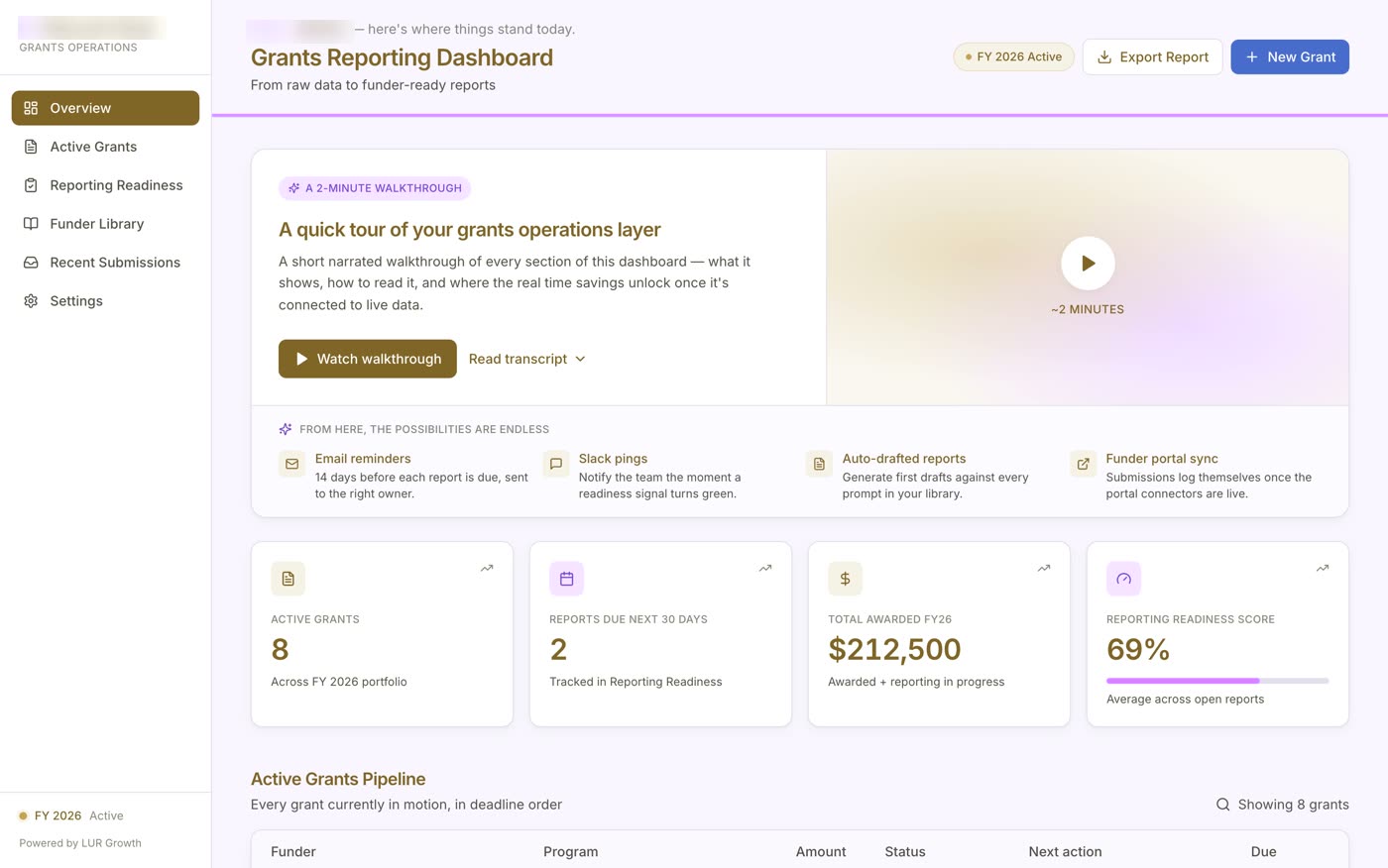
A children’s services nonprofit
9 staff hours returned every two weeks. 24 hours to 15, a 37.5% drop in time spent managing grant information, deadlines, and reporting.
A grants reporting dashboard for a fund development lead who was carrying every deadline in her head: eight active grants in one reporting layer, in deadline order, with a readiness score on every open report, built from the spreadsheets and emails the team already kept. Matched two-week log before and after, completed by the client. Open the demo ↗
Live build · August 21, 2026
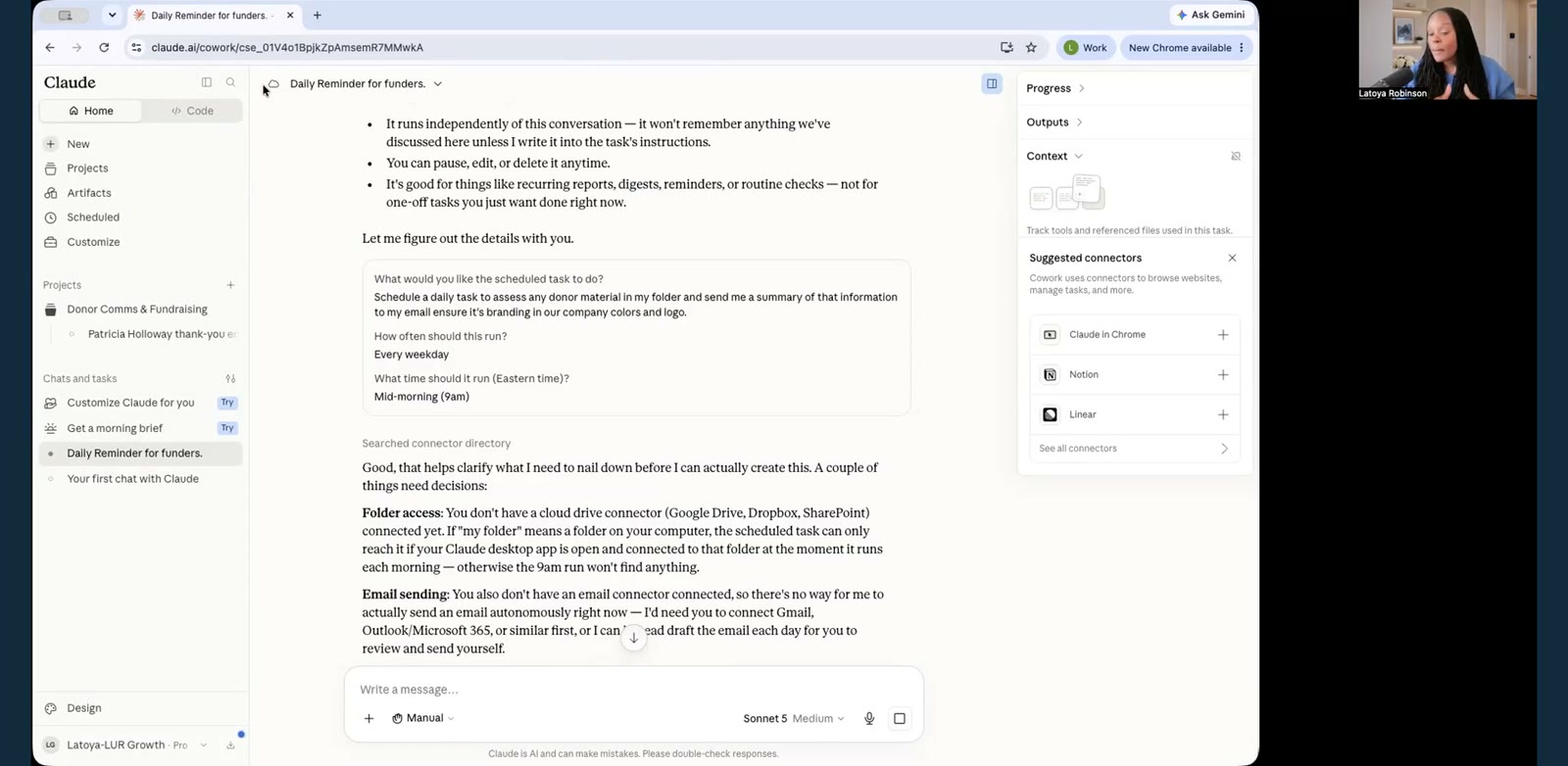
Stop Doing This By Hand
14 registrants watched four systems get built live
Donor communications, board reporting, grant narratives, internal operations. Built on screen in Claude, in real time, for a small nonprofit. Nothing pre-recorded, and the replay is the record.
The operator’s numbers
20 years in the nonprofit sector, fifteen of them in the executive director’s seat
Latoya Robinson grew one organization from $400K to $1.2M in under three years, and built the systems that made that growth survivable for the people carrying it.
Meet Latoya →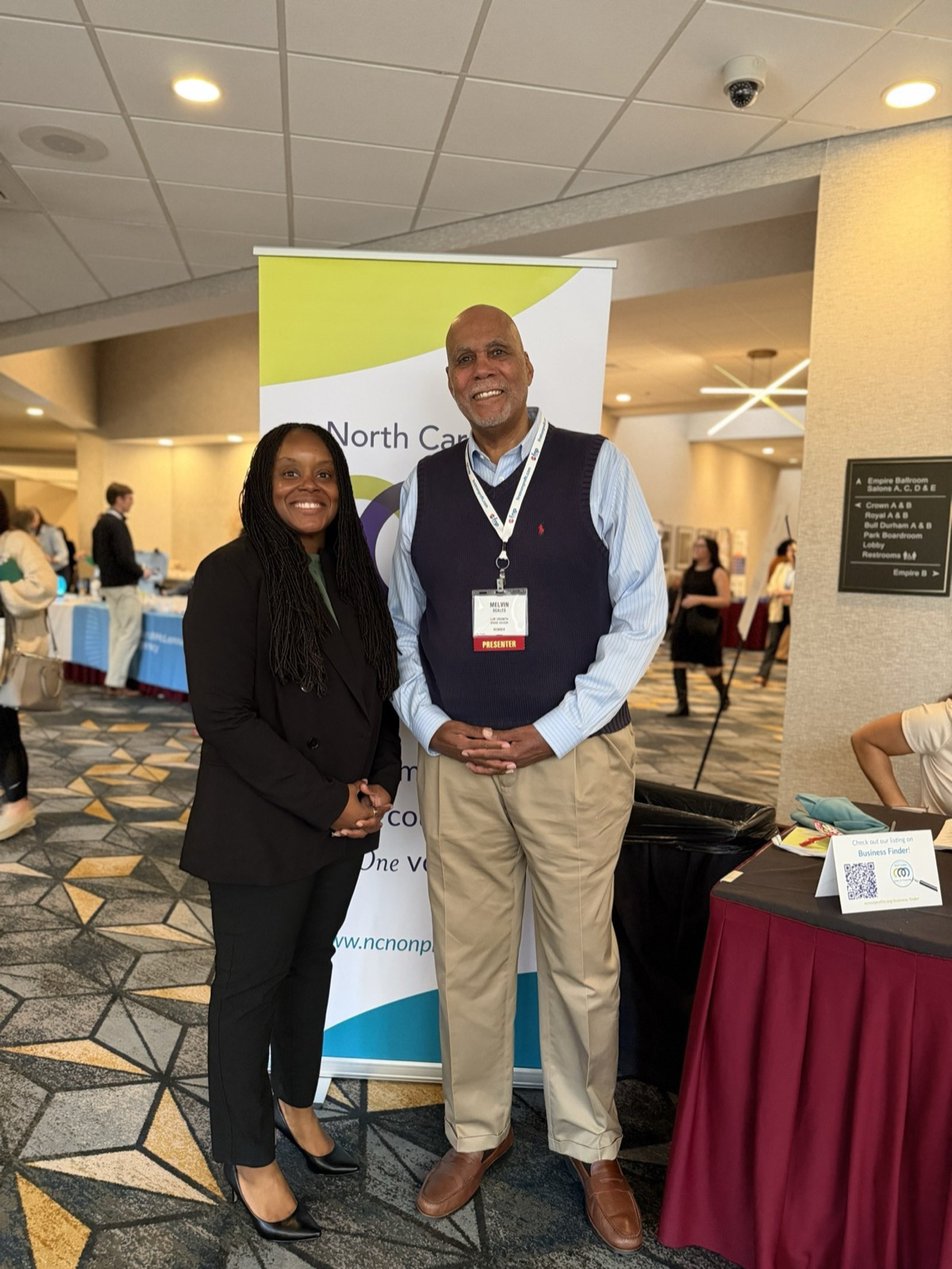
From the stage and the podcast
- October 2, 2026Responsible Agility, 6th Annual Agile in Nonprofits Online Summit
- May 12, 2026AI for Nonprofit Capacity, a systems workshop with HandsOn NWNC
- November 2025Lead Through the Storm, NC Center for Nonprofits Conference, Durham
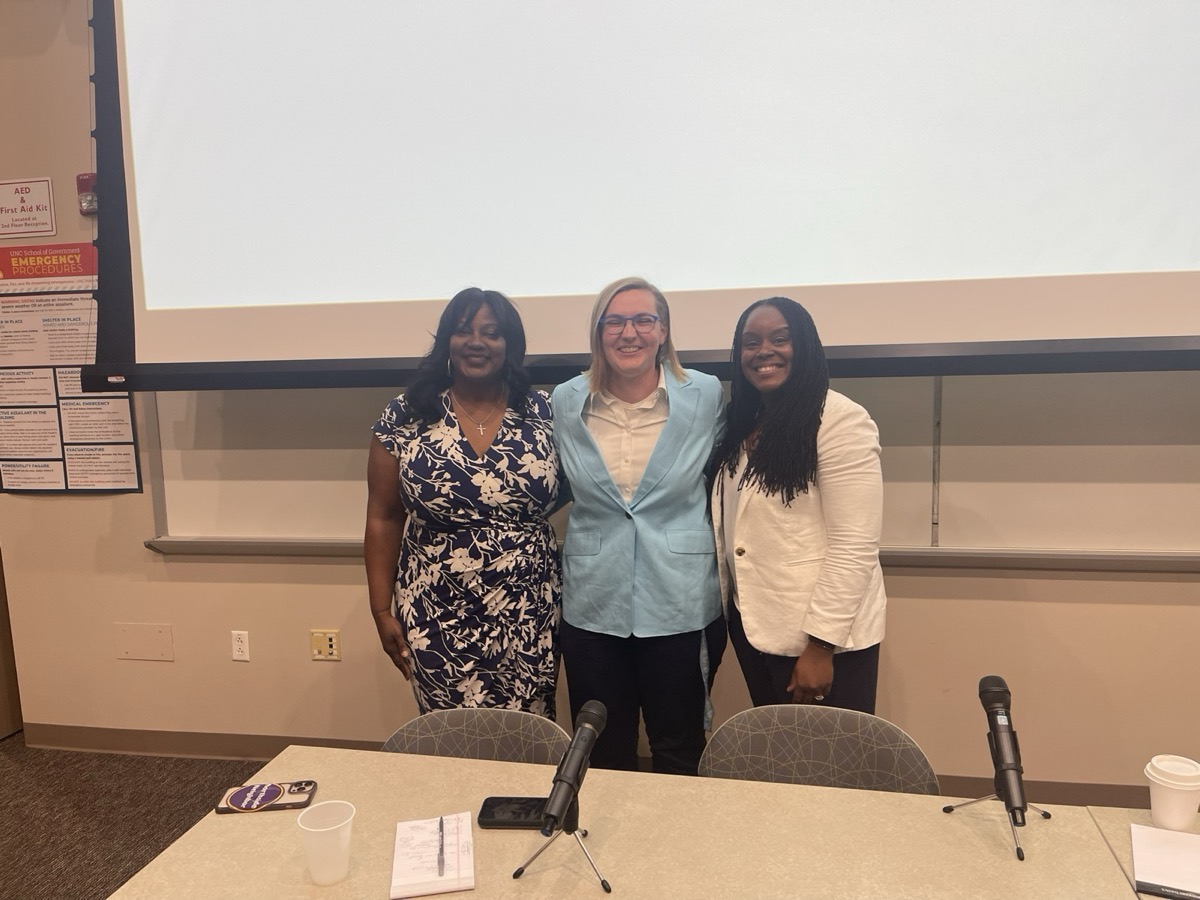
- April 2025Speaking engagement, UNC School of Government, Chapel Hill
- Podcast · Episode 305Your Path to Nonprofit Leadership, with Dr. Patton McDowell
Worked with, supported, or presented alongside


Winston-Salem, North Carolina. Partnering with organizations across the United States.
Nothing on this rail is a projection. Dates ahead of today are booked.
08 · In their words
What the people
in those rooms said.
From their own emails and recorded calls, trimmed for length, shared with their permission.
“This is the secret sauce right here. This is unbelievable. I think you’ve put more time into this than I had any idea.”
Jason Walser, Executive Director, a North Carolina family foundationOn the executive assistant dashboard built for him, April 2026
“Knowing that [our database] would remain the database of record is exactly what we were looking for. Then having the client workflow on top of that, so that the user experience for both our staff and our clients is seamless, would be ideal.”
Chief Operating Officer, a Service-Based NonprofitWinston-Salem, on the drafts for their database transition, written before any engagement began
“It really looks fantastic and quite professional.”
Dr. Patricia Morris, Executive Director, Community Impact Fund of the Virgin IslandsOn the website and micro-loan platform rebuilt before the Named Fund campaign
“We are grateful for your partnership on this work, and we are already seeing the impacts on our internal capacity. I, in particular, am benefitting from your advice.”
Lauren Frye, for the Board of Directors, Community Design StudioWinston-Salem, during the fund development engagement
“You really went above and beyond. I showed the walk-through video to the team in our Monday morning meeting and the ED was blown away. Loved it.”
Fund Development, a Children’s Services NonprofitOn the delivery-day and grants-reporting dashboards drafted after a May 2026 workshop
“The reports look great, and I’m glad the program is getting a good level of participation.”
Grants Administrator, a County Government FunderOn the monthly reporting built for a bilingual youth and family program
09 · Start where the strain is
Four ways to move
from fragile to durable.
You do not need another strategy deck. You need the right next build, scoped to the problem your organization can no longer afford to carry.
Capacity Diagnostic
$2,400
See what is breaking
A focused assessment that finds the bottleneck, quantifies the cost, and gives your board a prioritized, funder-ready path forward.
- 2–3 weeks
- Board-ready findings
- Clear priorities
Capacity Roadmap
$5,500
Design what comes next
Turn the diagnosis into a practical operating blueprint: workflows, data structure, ownership, tools, measures, and an adoption plan.
- 5–6 weeks
- Implementation blueprint
- Staff-aligned
Focused Build
$6,500
Fix the one that hurts
One workflow and the one or two systems it reads from, built, documented, and handed over in four to six weeks. Reconciling the records it depends on is included, mid-migration or not.
- 4–6 weeks
- One workflow
- Handed over
90-Day Build
Starting at $18,000
Build it until it works
We configure the system, document the work, train your people, and stay through real-world adoption, not just the handoff.
- 90 days
- Done-with-you build
- Team adoption
What moves the build price: how many workflows, how many systems they connect, and how much training the team needs. The scale, so nobody has to guess:
| Focused Build. One workflow, and the one or two systems it reads from, 4 to 6 weeks, documented and handed over. Reconciling the records it depends on is included. | $6,500 |
| 90-Day Build. Two workflows across up to two systems, training, and adoption support. | from $18,000 |
| Three workflows across three systems, 90 days. The full capacity architecture. | $24,000 |
| School-scale. The four school jobs across the platforms the school already runs. Scoped after the diagnostic names them. | from $24,000 |
| Running cost after handoff. The AI account and automation hosting, in your name at the vendors’ published rates, no markup. Most single-workflow systems land near the low end. | $30 to $120 a month |
The diagnostic and roadmap fees credit in full toward any build. The credit holds for 180 days, and it pauses while your board decides. Each step stands on its own, and each ends with a written read you keep whether or not you continue. A four-person organization with a budget near $1M most often starts with the diagnostic and moves to one Focused Build: $2,400 for the diagnostic, then $4,100 more for the build, $6,500 in total.
Already have a strategic plan?
Keep it from becoming another document on a shelf.
Your planning partner sets the direction. LUR Growth builds the ownership, dashboard, review rhythm, and workflows that turn the plan into accountable action.
Explore strategic plan implementation →Need to justify the investment?Every engagement can include a board- and funder-ready capacity case.Start with the free scorecard →
10 · Who we work with
The same system,
three kinds of mission.
 Community nonprofitsExecutive directors carrying too muchDonor systems, reporting, board packets, the newsletter, the story. Built once, documented, run by your team. Start with the $2,400 diagnostic.
 Community foundations and their granteesCapacity infrastructure across a portfolioFunders we already work beside: a family foundation whose executive director runs on a dashboard we built in 2026, and a North Carolina community foundation that refers the agencies it funds. For your grantees: the diagnostic at $2,400 each, every grantee keeps its own data, you get one roll-up.
 Independent schoolsAdvancement, admissions, and the business office, connectedThe annual fund, admissions follow-up, family communication, and the board packet, on the tools the school already runs: Blackbaud, Veracross, FACTS, Google Workspace. Student and family records stay in the school’s own systems.
11 · How it runs
The questions a board asks
before it says yes.
Short answers, the same ones you would get on the call.
The one-page board brief (PDF) ↓Who does the work
Latoya designs every system and leads every build. A Technical Systems Architect builds the integrations beside her, and a second builder is on every engagement from day one, so two people always know your build. If Latoya is out for six weeks in the middle of it, the LUR Growth Technical Systems Architect on your engagement finishes it from the same documentation, in accounts you already own, and nothing waits on her return. A bench of vetted technology partners covers specialist work. Everyone who touches your data signs your confidentiality agreement before they see it. You meet each of them, and you approve every account we create.
The first 30 minutes
No pitch. We walk through where the work lives today, who holds it, what breaks when they are out, and which one job to fix first. You leave with a one-page read of where to start, whether or not we work together. The diagnostic goes further: two weeks of logging, the five areas scored, and the board-ready read your chair can put in the packet. Ask for references and you get three people who have lived the work: Dr. Patricia Morris, Executive Director of the Community Impact Fund of the Virgin Islands; Lauren Frye of the Community Design Studio board; and Jason Walser, executive director of a North Carolina family foundation. Each will take your call or email, before you book anything if you prefer. Clients are named on this site only where they have said yes. The rest will name themselves to you.
Your data and the people in it
Your database of record stays yours. We build in accounts you own, on tools you already pay for. Drafting runs on Claude under business terms that keep your inputs out of model training, on an account in your name at the vendor’s published rate, with no markup. Only the fields a draft needs are sent, never the whole database, and never a record you have marked confidential. A person on your team reviews every output before it lands anywhere. Every engagement includes a written AI use policy your board can adopt: scope, approved uses, data rules, the vendor, who reviews, and how to report a concern. Read the policy or download it as a PDF. LUR Growth carries technology errors and omissions insurance through The Hartford, and a certificate of insurance is available to your board on request.
What you own when we leave
Admin rights, documentation, training recordings, and the workflows themselves, running on your accounts. No retainer required. For 90 days after handoff, anything that breaks is fixed at no charge. After that, if you want us back, you ask, and the work is quoted before it starts.
The LUR Growth Method
Diagnose. Build. Transfer.
Measure.
One company. One method. Multiple ways to engage. Every LUR Growth engagement follows the same four steps. The scope changes; the standard does not. We find what is draining capacity, build the system, transfer ownership, and measure what changed.
D
Step 1Diagnose
Find the work consuming capacity and establish the baseline.
B
Step 2Build
Create the smallest complete system that solves the problem.
T
Step 3Transfer
Train the team, document the workflow, and hand over ownership.
M
Step 4Measure
Compare the result with the baseline and report only what the evidence supports.
AI only enters after the process is clear, the data is trustworthy, and the people who will use it are at the table.

15years leading
from the inside
from the inside
Why I built LUR Growth
I know what it costs when the leader
becomes the infrastructure.
“I know what it costs when the mission depends on one exhausted person holding the whole system together.”
Latoya Robinson, M.S., has spent 20 years inside the nonprofit sector, with 15 of them in the executive director seat. She grew an organization from $400K to $1.2M in less than three years, navigated the funding pressure, and built the operational systems that made growth sustainable.
Today, she brings that operator’s eye to community organizations ready to make their impact measurable, their work repeatable, and their leadership survivable.
LUR Growth works beside your team as a nonprofit AI partner. Every system is documented and handed over, so your organization owns what it depends on.
3× growth of the nonprofit she ran, $400K to $1.2M CPD accredited provider No. 51018, 2026 to 2028, Continuing Professional DevelopmentNC Winston-Salem · working across the United States
CPD accredited provider No. 51018, 2026 to 2028, Continuing Professional DevelopmentNC Winston-Salem · working across the United StatesTheCalm
InfrastructureLab
InfrastructureLab
1Learn
2Practice
3Maintain
4Community
LearnShort, practical sessions on the systems a small team runs.
PracticeWork on your own workflow with someone in the room.
MaintainKeep what you built running as people and tools change.
CommunityLeaders carrying the same weight, comparing notes.
The Calm Infrastructure™ Lab · Free community
Strengthen what you build.
Then keep it standing.
The Calm Infrastructure Lab helps nonprofit leaders strengthen and maintain their systems through practical learning and community support. CPD accredited, free to join.
Join the free community ↗Enter the Lab →5connected
areas
areas
StrategySet the direction, priorities, and decisions everyone can follow.
ImpactMeasure what changed and tell the story with evidence.
SystemsCreate repeatable workflows so critical work does not get dropped.
DataMake information easy to find, trust, and use.
PeopleClarify ownership and equip the team to deliver.
StrategyImpactSystemsDataPeople
Your next move starts here
Which weak link is
costing you capacity?
Answer five plain-language questions. In about five minutes, you will see the area under the most strain, and the first move to strengthen it.
✓ Five questions, about five minutes✓ Result on screen after your name and email✓ Built for nonprofit leaders
Find your capacity score ↗Questions nonprofit leaders ask
Clear answers before you choose a tool.
What does an AI consultant for nonprofits actually do?
A nonprofit AI consultant helps leaders choose the right operational problem, redesign the workflow, establish safeguards, implement practical tools, and prepare staff to own the new system. The work connects AI to mission, risk, people, and daily operations.
Where should a nonprofit start with AI?
Start with one recurring problem that consumes staff time and can be reviewed by a person. Then assess the information, ownership, risk, and staff capacity required to make the workflow safe and repeatable.
Does LUR Growth provide AI training?
Yes. Training is connected to real nonprofit workflows, responsible use, human review, and staff adoption. LUR Growth also offers implementation when a workshop alone will not solve the operating problem.
Can LUR Growth work with organizations outside North Carolina?
Yes. LUR Growth is based in Winston-Salem, North Carolina and works with nonprofit and philanthropic organizations across the United States. Every engagement runs virtually, with in-person sessions in North Carolina when they help.
Which systems has LUR Growth built on?
Google Workspace, Microsoft 365 and Outlook, GoHighLevel, Baserow, and n8n, with Claude for drafting, all in accounts the client owns. Builds keep the client's database of record in place rather than replacing it. Salesforce, Raiser's Edge, Bloomerang, and school platforms such as Blackbaud and Veracross have not been built inside yet; that work is scoped after the diagnostic and said so plainly before any commitment.
Worth a conversation
Start where the strain is.
Thirty minutes with Latoya about where your systems are today and what it would take to make them hold. No pitch. If the timing is not right, you leave with a clearer picture and nothing owed.